
PGT-A by Country in Europe: What Is Possible, With and Without Gender Selection
PGT-A by country in Europe is a patchwork. The test checks the chromosomes of an embryo, and it is not simply available everywhere. For the usual medical reasons, meaning higher age, repeated miscarriages or failed IVF attempts, PGT-A is not allowed in Denmark, France, Germany, Hungary, Lithuania, Malta, the Netherlands, Norway and Sweden. In Spain, the law names it: clinics may test embryos for other alterations that can affect their viability, and this does not need case-by-case approval. The Czech Republic and the UK have no specific rule, so clinics offer PGT-A as an add-on.
A serious hereditary disease in the family is a different case, for example haemophilia or Duchenne muscular dystrophy. Then the test is PGT-M or PGT-SR, not PGT-A, and almost every European country allows it, in many of them only after an ethics commission or a national authority has approved the case.
Choosing the sex of a child for non-medical reasons is a third question. According to an ESHRE (European Society of Human Reproduction and Embryology) survey of 43 European countries from 2024, embryo sex selection outside testing for sex-linked diseases is possible only in Armenia. In North Cyprus and Albania, no law prohibits it and no law regulates it clearly, so some clinics carry it out.
I am not a doctor, so I do not explain the medicine. This article shows, country by country, what is possible, what is prohibited and where the rules are unclear. Before you book, ask your fertility clinic in writing which rule it follows.
IVF and PGT: PGT-A, PGT-M and PGT-SR Explained
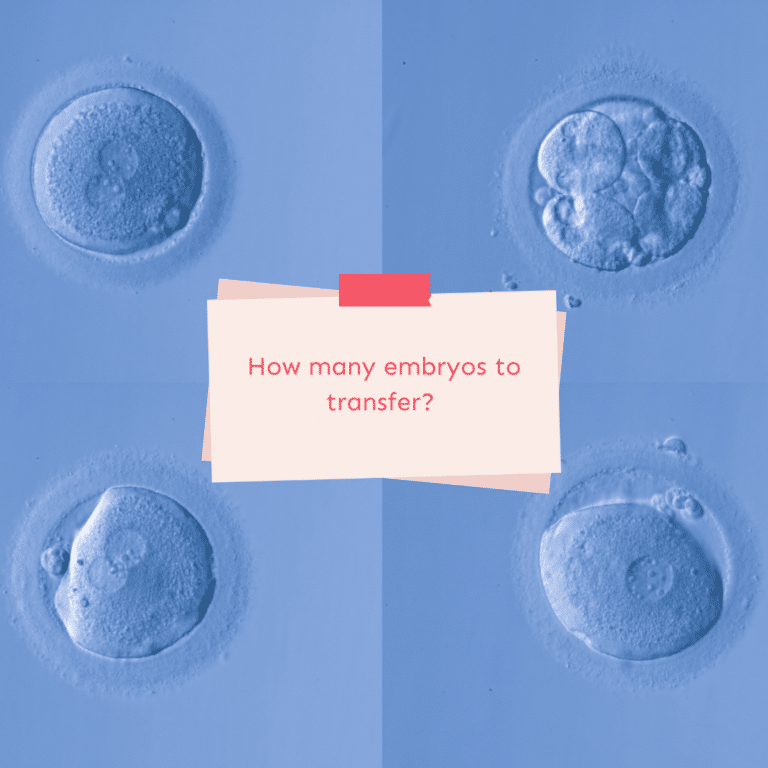
PGT stands for preimplantation genetic testing. It only works with IVF, because the embryo is tested in the lab before it is transferred to the womb. A few cells are taken from the embryo and checked.
There are three kinds of tests, and the law treats them differently:
PGT-A checks whether an embryo has the normal number of chromosomes. It is offered for higher age, repeated miscarriages or failed IVF attempts.
PGT-M looks for one specific hereditary disease in the family, for example haemophilia.
PGT-SR looks for a structural change in the chromosomes of a parent.
Many countries allow PGT-M and PGT-SR but not PGT-A. That is why you must always ask which of the three tests a clinic means. If you want to know how the tests work in detail, you can read my guide to PGD and IVF.
Preimplantation Genetic Testing (PGT-A) by Country: Where It Is Possible and Where It Is Not
Understanding PGT-A by Country in Europe
The rules differ a lot from country to country. I sort the countries into four groups.
Countries Where PGT-A Is Not Allowed for Medical Reasons
In these countries you cannot get PGT-A because of age, repeated miscarriages or failed IVF attempts.
France prohibits it, even for age or repeated miscarriages. Sweden has prohibited it since 2006. In Norway and Lithuania, only testing for a known hereditary disease is permitted. In Hungary, the health ministry treats PGT-A as a research method, so clinics do not offer it routinely. In Malta, the law names only testing for specific hereditary diseases, so PGT-A is practically unavailable.
Germany allows testing only when a parent carries a genetic condition and an ethics commission agrees. There is no routine screening.
The Netherlands also appears on the ESHRE list of countries where PGT-A is not permitted. Denmark is a popular destination, so one detail matters. PGT-A is possible there only within a research protocol that an ethics committee has approved, and the embryo samples are analysed in a laboratory in the UK. Ask the clinic exactly what it offers and on what basis.
Countries Where Genetic Reasons Open the Door: PGT-M and Ethics Commissions
A known serious hereditary disease in the family is a different situation. In almost all of the countries above, PGT-M or PGT-SR is possible, but only for this reason.
In Germany, an ethics commission must agree. In Malta, the disease must be on an approved list. In Denmark, exceptions are approved by the health authority. In France, the disease must be particularly serious and incurable. Norway, Sweden, Lithuania and Hungary also limit it to serious hereditary diseases.
Countries Where PGT-A Is Possible, With or Without Clear Conditions
Some countries set clear conditions. In Austria, you need three failed transfers, three miscarriages or a genetic condition in a parent. In Switzerland, the couple needs a medically diagnosed infertility. In Poland, you need a medical indication and genetic counselling. In Portugal, PGT-A is tied to specific clinical indications.
In Spain, the law allows testing for alterations that can affect the viability of the embryo, without case-by-case approval. In the Czech Republic and the UK, no specific rule exists, so clinics offer PGT-A as an add-on. The same is true for Italy, Belgium, Greece and Finland. Turkey has no clear rule either, and clinics market PGT-A to international patients anyway. In Bulgaria, PGT-A is even required when the eggs come from a donor aged 38 or older.
Countries Where the Rules Are Unclear or Not Confirmed
In North Cyprus, no regulation exists. In Albania, Romania, Georgia and Slovakia, the law says nothing about it. In Estonia, Latvia, Croatia and Slovenia, I could not confirm a clear rule. In Serbia, a permit is needed in each case. In Ireland, a law exists but is not yet in force. In the Republic of Cyprus, PGT-A is allowed only for medical indications, but the list of indications has never been published. In Luxembourg and Iceland, patients are usually referred abroad.

Gender Selection and Family Balancing: What Is the Difference?
Gender selection means that the sex of the embryo decides which embryo is transferred. There are two reasons why people ask for it, and the law treats them in completely different ways.
IVF Gender Selection for Non-Medical Reasons
Here the sex of the child is a wish, and no disease in the family is behind it. In Europe, this is not allowed. The Oviedo Convention of the Council of Europe says in Article 14 that assisted reproduction must not be used to choose the sex of a child, except to avoid a serious hereditary disease linked to the sex. 30 states have ratified it. Many countries have the same rule in their national law, for example Germany, Spain, the Czech Republic, Switzerland and the Netherlands.
Family Balancing: A Child of the Other Sex After You Already Have Children
Family balancing means that a family wants a child of the other sex, because the children they already have are all girls or all boys. The wish is understandable, but in all countries I checked, family balancing counts as non-medical sex selection and falls under the same rule.
Some clinics set their own conditions, for example a minimum number of children of the same sex. This is the rule of the clinic and not of the law. Israel has had a fixed national rule since 2005: a committee of the Ministry of Health has to approve each case, and the parents must already have at least four children of the same sex.
Does PGT-A Allow You to Choose the Sex of an Embryo?
PGT-A shows whether an embryo is euploid, which means it has the normal number of chromosomes. Most laboratories use the NGS method for this today. With NGS (Next Generation Sequencing), the same result automatically shows whether the embryo is a girl or a boy. The test is done in any case, so the laboratory knows the sex. In most European countries, the doctor or geneticist must not tell you the sex of the embryo.
Countries Where Gender Selection Through IVF Is Prohibited and Where It Is Not Regulated in Europe
Choosing the sex of a child for non-medical reasons is prohibited in almost every European country that has an IVF law. A few countries have no clear rule, and this is where clinics offer it anyway.
Countries Where Sex Selection Is Prohibited
In these countries, the law prohibits choosing the sex of a child for non-medical reasons. In Germany, selecting sperm by sex is even a criminal offence. The Czech Republic, Switzerland, the Netherlands, Austria, Poland, Spain, Portugal, Italy, Greece, Belgium, France, Bulgaria, Hungary, Denmark, Finland, Estonia, Latvia, Turkey, Ukraine and Malta have the same rule in their national laws or regulations. In the UK, a clinic may only offer it for a condition that the HFEA has approved.
The only exception is a serious hereditary disease linked to the sex. I explain this case further below.
Countries With No Rule: North Cyprus and Albania
In a few countries, no law says clearly what is allowed. North Cyprus has no law that prohibits sex selection, and no law that regulates it. Clinics there generally offer it, but they hardly publish it.
Albania is a special case. The national law on reproductive health does not mention sex selection. At the same time, Albania has ratified the Oviedo Convention, which prohibits it. So it is not officially permitted, but I know of a clinic there that offers it.
ESHRE and ASRM: Two Different Approaches to Sex Selection
Two large professional societies give guidance on sex selection for non-medical reasons. ESHRE is the European society (European Society of Human Reproduction and Embryology), ASRM is the American one (American Society for Reproductive Medicine). Both do not encourage it, but they come to different conclusions about what follows from that. This is one reason why the topic is handled so differently in Europe and in the US.
What ESHRE Says
In 2013, the ESHRE Task Force on Ethics and Law looked at sex selection for non-medical reasons. The group did not reach a single position, and the report describes two views.
The first view is to keep the ban, because it sends a clear message to society. The second view is that the reasons for the ban are not convincing, and that sex selection could be allowed under conditions. If the ban were lifted, family balancing could be one such condition, in a setting that collects data on what happens.
So ESHRE has no clear rule for or against it. The rules in Europe come from the national laws and not from ESHRE.
What ASRM Says, and Why It Is Possible in the US
In 2022, the Ethics Committee of ASRM said that sex selection for non-medical reasons should not be encouraged. At the same time, it said that doctors have no ethical duty to offer it and no duty to refuse it. Clinics are asked to write down their own policy on whether and when they offer it.
In the US, no federal law prohibits it. This is why some US clinics offer it and others do not. The decision lies with each clinic.
MicroSort and Sperm Selection Techniques: What Prospective Parents Should Know
Some clinics offer to select the sex of a child before fertilisation. For this, the sperm are sorted by the chromosome they carry, X or Y, before insemination or IVF. This is called sperm sorting. It is less reliable than testing an embryo. MicroSort is the best known method.
MicroSort and the FDA
MicroSort was developed in the USA. It never received final approval from the US Food and Drug Administration (FDA). It was only offered within an FDA clinical trial. In 2010/2011, the FDA stopped new enrolments for family balancing. For avoiding a genetic disease, it could still be offered for a limited time.
Some clinics still offer MicroSort today. The question is not whether US law prohibits it, but whether the clinic tells you the truth. A clinic that offers MicroSort without saying that it is not approved by the FDA is not trustworthy. I wrote a separate article about this.
Sperm Selection by Sex: What the Law Says
In Europe, sperm sorting falls under the same rule as embryo selection in the countries I checked. The Oviedo Convention prohibits assisted reproduction for choosing the sex of a child, except to avoid a serious hereditary disease linked to the sex. The wording does not depend on the technique, so it covers sperm sorting as well.
In Germany, it is a criminal offence to fertilise an egg with sperm selected by sex, except in the case of a serious sex-linked disease such as Duchenne muscular dystrophy. The Netherlands, the Czech Republic and Switzerland prohibit it with the same exception. In Malta, sperm may not be selected by sex chromosome, except to prevent a sex-linked genetic illness.
Gender Selection for Medical Reasons: Sex-Linked Hereditary Diseases
There is one case where the sex of an embryo may be chosen almost everywhere in Europe: a serious hereditary disease that is linked to the sex. Here the sex is not a wish. It is part of a genetic test (PGT-M) to avoid passing on the disease. Do not confuse this with the medical reasons for PGT-A, such as age or repeated miscarriages.
Which Diseases Qualify
Many of these diseases are carried on the X chromosome and affect boys more often than girls. Examples are haemophilia, Duchenne muscular dystrophy, fragile X syndrome and X-linked adrenoleukodystrophy.
No country has a fixed list or a legal definition of a serious disease. Each case is assessed individually. In Switzerland, the National Ethics Committee looks at three criteria: the child would lose the ability to lead a self-determined life, the child would have chronic intense pain, or the life expectancy is clearly reduced. One criterion is enough. In Germany, the Federal Administrative Court says that a disease is serious if it differs clearly from other hereditary diseases through a low life expectancy or severity, and if it can be treated poorly. In the UK, the HFEA keeps a public list of approved conditions.
Mild conditions do not qualify. Whether your case qualifies is decided by doctors and the responsible authority after a personal assessment.
Where Gender Selection Is Allowed and How the Selection Process Works
The Oviedo Convention is the common baseline in Europe. Article 14 allows the choice of sex only to avoid a serious hereditary disease linked to the sex. How a country approves a case differs.
In Germany, an ethics commission must agree, and a state authority must recognise the disease. In Spain, the national commission is involved. In Greece, the national authority reviews each case. In the UK, the condition must be on the HFEA list. In Switzerland, all conditions in the law must be met. There must be no other way to avoid the disease, the disease must likely start before the age of 50, no effective treatment may exist, and the couple must confirm in writing that the risk is unreasonable for them.
In my experience, ethics commissions can be very strict in some countries.
What to Ask Your Fertility Clinic About PGT-A and Gender Selection
The rules differ so much from country to country that you should not rely on the website of a clinic.
Questions About PGT-A
Ask which method the clinic uses and how many chromosomes the test covers. PGT-A can be done with FISH or with NGS. Where the test is done matters too. Very rarely does a clinic have its own genetic laboratory. Most clinics send the samples to an external laboratory. In North Cyprus, they are often sent to Istanbul or even to the UAE. Where PGT-A is offered under special rules, as in Denmark, check where the test is done. The samples probably go to the UK.
Ask what the success rate counts. In my experience, almost all clinics give the rate at the positive pregnancy test. They do not follow up until the birth. The rate at birth is lower, because some pregnancies end in a miscarriage. In my experience, the miscarriage rate starts at around 15% and is quite high from the age of 40. Many women who ask for gender selection are over 30 or over 40, and many forget this. Ask for the miscarriage rate too.
With a tested euploid embryo, the success rate is higher and the miscarriage rate is lower. In my experience, age then makes little difference. What age changes is how many euploid embryos you get.
Questions About PGT-A With Gender Selection
Most clients who want gender selection go to North Cyprus, where it is neither explicitly allowed nor prohibited. The clinics there are modern and cheaper than in the USA. They offer it with PGT-A, using FISH or NGS, and sometimes also with MicroSort. Most of them mention nothing about it on their homepage, neither prices nor success rates.
Ask what the test costs and which test it is. If it is NGS, ask how many embryos are included. Often the price of the test is followed by a price per embryo. A package price usually includes a certain number of embryos, and you pay extra for every embryo above this number. Ask whether the cost of freezing is included, because with NGS the embryos are frozen, see my article about.
Ask how many cycles it usually takes. In my experience, healthy young women who already have children usually need two cycles. Do not be disappointed after one cycle. Many women do not realise that they exclude one sex, so about half of the embryos cannot be used and the chance per cycle is lower.
In 20 years, I have never had a client with a medical reason for choosing the sex. If you do have one, first check in your own country whether a treatment is possible.
“A low price for gender selection is not a bargain. Ask what exactly the clinic does, and which test it uses, before you look at the price.“
Nathalie Wiederkehr
Warning Signs When a Clinic Offers Gender Selection
Be careful if a clinic does not tell you how it does the test. FISH is faster and cheaper than NGS, because it checks only some chromosomes, from five, sometimes seven, nine or more. NGS checks all of them. With only a few chromosomes checked, you cannot know how healthy the child will be. As a consequence, a miscarriage is more likely, or the success rate is lower. A very low price for PGT-A is often a sign of FISH.
The two methods also differ in timing. With FISH, the test is done on day 3, and the embryo is transferred fresh. On day 3, only one cell can be taken, which carries a risk of mosaicism, see my article about. With NGS, the test is done on day 5. The embryo is larger, and more cells are taken. The embryo is frozen and transferred later in a natural cycle. Most doctors find that the success rate is higher with NGS and a frozen transfer.
Be careful if a clinic does not explain in depth, for example which method it uses, and does not state the price for freezing.
Be careful if a clinic in Europe says that gender selection is fully legal. In almost all of Europe, it is prohibited.
Be careful if a clinic offers sperm sorting such as MicroSort and does not tell you that it is not approved by the FDA.
Be very careful if gender selection is offered at a very low price. I have seen offers where the clinic does not select embryos at all. The pregnancy starts with any embryo, and the clinic ends it if the sex is not the one you wanted.
“Many women do not realise that excluding one sex halves the number of usable embryos. I want my clients to know this before the first cycle, not after the first disappointment.”
Nathalie Wiederkehr
PGT-A and Gender Selection in Europe, Frequently Asked Questions
Is PGT-A allowed in Europe?
It depends on the country and on the reason. For the usual medical reasons, such as age, repeated miscarriages or failed IVF attempts, PGT-A is not allowed in France, Sweden, Norway, Lithuania, Hungary, Malta, the Netherlands and Germany. In Denmark, it is possible only within a research protocol. In Spain, the Czech Republic and the UK, clinics offer it.
Can I choose the sex of my baby with IVF in Europe?
For non-medical reasons, no. The only exception is a serious hereditary disease linked to the sex. In North Cyprus and Albania, no law regulates it clearly, and some clinics offer it.
What is the difference between PGT-A, PGT-M and PGT-SR?
PGT-A checks the number of chromosomes of an embryo. PGT-M looks for one specific hereditary disease, and PGT-SR for a structural change in the chromosomes of a parent. You can find more in my guide to PGD and IVF.
Can PGT-A show the sex of an embryo?
Yes, with NGS the sex of the embryo is known to the laboratory. In almost all countries, except for example North Cyprus, the doctor or geneticist must not tell you.
What is family balancing, and is it allowed?
Family balancing means choosing the sex of a child because you already have children of the other sex. It counts as sex selection for non-medical reasons and is prohibited in the same countries. Some clinics set their own rules, for example a minimum number of children. This is the policy of the clinic and not the law.
Is gender selection allowed in North Cyprus?
No law prohibits it, and no law regulates it. This is why clinics there offer it, but it is not officially permitted either. Ask the clinic exactly what it offers and how it does the test.
How do I recognise a trustworthy clinic for PGT-A?
Ask which method the clinic uses, where the test is done, what the price includes, including the cost of freezing, and what the success rate counts. From the outside, it is hard to judge a clinic. An expert who knows the clinics from personal visits can help you. I offer an individual consultation for this.
How I Can Help
If you are currently exploring which clinic or which country might be right for you, I am here to support you. I have been helping people navigate international clinics for many years, and often a short conversation already brings a lot of clarity. You can find all my current offers here. If you have any questions, feel free to reach out, I look forward to hearing from you.
Sources
Guidelines and position papers
- ASRM Ethics Committee: Use of reproductive technology for sex selection for nonmedical reasons: an Ethics Committee opinion (2022)
- ESHRE Task Force on Ethics and Law 20: Sex selection for non-medical reasons, Human Reproduction (2013)
- Council of Europe: Convention on Human Rights and Biomedicine (Oviedo Convention, ETS 164), Article 14
Surveys and studies
- Calhaz-Jorge C. et al.: Survey on ART and IUI: legislation, regulation, funding and registries in European countries, an update. Human Reproduction 39(9), 2024. ESHRE overview: Legislation and reimbursement of ART and IUI
- Hreinsson J. et al.: Preimplantation genetic testing legislation and accessibility in the Nordic countries. Acta Obstetricia et Gynecologica Scandinavica 99 (2020)
Laws and regulators
- Spain: Ley 14/2006, Chapter III; CNRHA, Recomendaciones PGT 12.1 (2025)
- Germany: Embryonenschutzgesetz, Section 3; Federal Administrative Court, judgment of 05.11.2020 (3 C 12.19)
- Switzerland: Fortpflanzungsmedizingesetz (FMedG), Art. 5a; National Ethics Committee, guidelines on preimplantation diagnosis (2022)
- Czech Republic: Act No. 373/2011, Section 5
- Netherlands: Embryowet, Art. 26
- Denmark: Act on Assisted Reproduction, Section 7
- UK: HFEA, Approved PGT-M conditions